



Curriculum
(Learning Centre)
Curriculum Map

Our Curriculum – Learning Centre
At New Bridge Learning Centre our curriculum is designed to empower every pupil to lead a fulfilling, meaningful, and independent a life as possible. We offer a personalised, flexible learning experience that meets the unique needs of our learners.
Our Curriculum is Based on 7 Destinations
Everything we teach is underpinned by seven key long-term outcomes – what we call our 7 Destinations. These guide our planning, teaching, and assessment, ensuring every learning experience moves your child closer to their individual goals for adulthood.
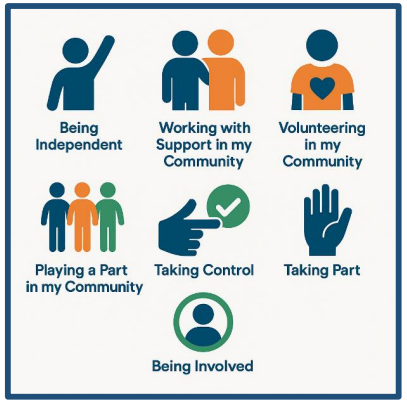
These destinations reflect not only academic progress, but also personal development, life skills, and preparation for adulthood, employment, and community inclusion.
A Structured College Day
Our curriculum is delivered through a secondary model timetable, helping students prepare for the structure and expectations of adulthood. Learners have six lessons each day, providing variety, routine, and the opportunity to access a broad and balanced curriculum throughout the week.
How We Deliver Learning
At New Bridge Learning Centre, we know that strong, trusting relationships help our learners feel safe, confident, and ready to learn. That’s why we use a blended teaching approach that combines consistency with specialist expertise. Your child will spend the majority of their week - around 70% of their time - with their Form Tutor, who delivers most of the core subjects such as English, Maths, and Learning for Life. This helps to build a strong, supportive relationship and creates a calm, predictable routine. The remaining part of the timetable - about 30% - is taught by specialist Teachers. These Teachers bring their expertise and passion to subjects like PE, Outdoor Education, Creative Arts and Food Technology, offering exciting, creative experiences that help learners discover their interests and talents. This balance ensures that every learner benefits from consistency, connection, and high quality specialist teaching across a wide and enriching curriculum.
Key Curriculum Strands
All of our learner’s access subjects from the National Curriculum, carefully adapted to meet their individual needs, learning styles, and abilities. Lessons are designed to be inclusive, engaging, meaningful; ensuring that every learner can experience success, make progress, and enjoy their learning journey. Our lessons are designed to be inclusive and engaging, allowing every learner to: • Make progress at their own pace • Experience a sense of achievement • Develop confidence and enjoyment in learning We ensure that all learners are supported to reach their full potential across the following key curriculum areas:
Core Subjects
These subjects form the foundation of our curriculum and are closely linked to the development of communication, cognition, and essential life skills:
• English – Focused on communication, reading, writing, speaking and listening, with emphasis on functional literacy and self-expression.
• Mathematics – Practical and functional numeracy, including number, money, time, and problem-solving skills that apply to everyday life.
• ICT (Information & Communication Technology) – Basic digital literacy, using technology for communication, creativity, and learning how to stay safe online.
• RSHE (Relationships, Sex and Health Education) – Supporting personal development with a focus on friendships, healthy choices, consent, safety, and emotional well-being.
• Living Skills – Promoting independence through daily life skills such as hygiene, cooking, laundry, personal organisation, budgeting, and shopping.
Foundation Subjects
Our creative and expressive subjects allow learners to explore talents, build confidence, and develop fine and gross motor skills. They also contribute to emotional regulation and social interaction:
• Creative Arts – Expressive, therapeutic and skills-based visual arts/ developing rhythm, listening, coordination, and enjoyment/ movement and creativity to enhance physical development.
• Drama – Role-play, storytelling, and social communication.
• PE (Physical Education) – Adapted physical activities to support health, fitness, coordination, and teamwork.
• Food Technology – Essential life skills in cooking, nutrition, and food safety while encouraging creativity, healthy living, and an understanding of how food impacts our bodies and the environment.
• Outdoor Education – Providing opportunities for that develop resilience, confidence, independence and leadership.
Learning for Life
In addition to subject-based learning, all our learners take part in Learning for Life sessions. These sessions are specially designed to help each learner make steady progress towards their Education, Health and Care Plan (EHCP) outcomes.
Each learner has personalised goals, sometimes called small step targets —that break down their annual EHCP targets into manageable, achievable milestones.
These goals might focus on areas such as:
• Social and emotional well-being
• Mental health support
• Physical or sensory development
• Communication and interaction
• Building independence and confidence
These sessions are delivered by the Form Tutor, who knows them well and plans bespoke, meaningful activities to support their development in these areas. Whether it’s learning how to manage emotions, improving communication, or developing key physical skills, Learning for Life helps ensure your child is supported in every aspect of their growth – not just academically, but as a whole person.
This targeted, nurturing approach is at the heart of our commitment to preparing every learner for their next steps in life, both in and beyond College.
Curriculum Pathways
We understand that every learner learns differently. That’s why we offer personalised learning pathways that match everyone’s needs, strengths, and stage of development. These pathways guide how we teach and support learners throughout their College journey.
Community Living Pathway
A structured, community topic-based and practical curriculum, helping learners build skills in communication, independence, and learning through real-world experiences in and around our community. Each of the classes are structured to reflect the needs of the learners and are organised into one of the following pathways:
Semi-Formal Pathway (Pathway 2/3)
A more structured, topic-based and practical curriculum, helping learners build skills in communication, independence, and learning through real-world experiences.
Formal Pathway (Pathway 1)
For learners who would benefit from a more academic approach, with appropriate adaptations to support success. Each pathway is flexible and regularly reviewed to ensure learners are in the right place to thrive – academically, socially, and emotionally.
Interactive Pathway/Entitlement Pathway
Pre-Formal Pathway
For learners who benefit from a sensory-based and experiential approach to learning. This pathway focuses on early communication, physical development, and emotional well-being through highly personalised and hands-on activities. Pathway 1 in the Autism/Entitlement Base (AB) and Interactive Base (IB)
Semi-Formal Pathway
A more structured, topic-based and practical curriculum, helping pupils build skills in communication, independence, and learning through real-world experiences. Pathway 2 (AB & IB)
Progress and Assessment
We use a variety of approaches to track progress in a meaningful and personalised way. We use a secure online platform called Evidence for Learning to gather photos, videos, and written observations that capture achievements across both academic subjects and personal development areas.
This helps us build a clear picture of how your child is progressing—not just in their learning, but in areas like communication, independence, social skills, and emotional well-being.
Progress is measured in several key areas:
• Academic progress – through personalised subject targets and can include some accreditations
• EHCP outcomes – by tracking small-step targets linked to your child’s individual plan
• The 7 Destinations – our long-term life goals that guide everything we teach, including independence, community involvement, and personal control
Every learner has their own set of tailored targets, which are reviewed regularly and updated in response to their needs.
This joined-up approach helps us celebrate every success, identify areas for support, and ensure that your child is always moving forward on their own unique pathway.
Curriculum Communication Throughout the Year
At New Bridge, we believe that strong communication with families is key to supporting each child’s learning journey.
Over the course of the year, you will receive regular updates about your child’s progress and the curriculum they are following.
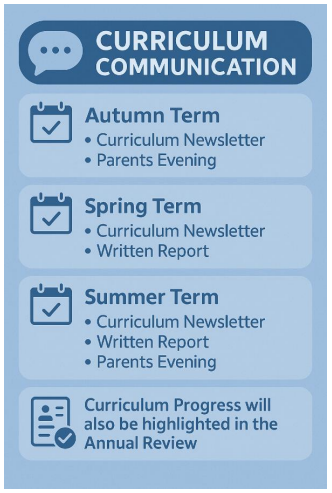
Each term, we will share a Curriculum Newsletter giving you an insight into what your child is learning in class.
You will also be invited to attend Parents’ Evenings in the Autumn and Summer Terms, where you’ll have the opportunity to speak with staff about your child’s progress, strengths, and next steps. In Spring and Summer, you will receive a written report covering both academic progress and EHCP outcomes.
In addition, your child’s Annual Review will provide a further opportunity to discuss curriculum engagement and progress in relation to their individual needs and targets. We’re committed to working in partnership with you every step of the way.